
Oxidation & Rusted Surfaces
Cleaning Oxidation & Rusted Surfaces
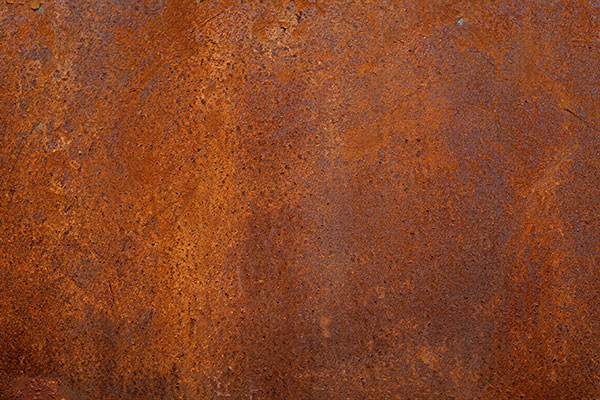 Laser cleaning of rusted surfaces is a non-contact, dry, and highly controllable method for removing corrosion from metals without damaging the base material. The process uses a laser beam to scan across the rusted surface with a beam width typically ranging from 30 to 3000 millimeters wide. Rust (iron oxide) absorbs the laser energy more readily than clean metal. The rapid heating causes the rust layer to vaporize or be ejected while the underlying metal remains largely unaffected.
Continuous-wave (CW) laser cleaners are most efficient for the removal of heavy rust and scale. This is especially true when working on large steel weldments, forgings or castings. The common wattage for this type of laser cleaning range from 1,500 to 3,000 watts or higher. This type of cleaning is sometimes less precise but achieves a high level of productivity.
The advantages of laser cleaning over traditional methods include: no abrasives, chemicals, or media cleanup; little change in the surface roughness unlike sandblasting; environmentally friendly and easily automated or integrated into production.
Laser cleaning is especially effective for maintenance and restoration projects where surfaces are often difficult to reach by hand removal methods. The process is also used for injection mold tooling, metal adhesives removal, automotive and aerospace components, non-destructive testing (NDT) preparation as well as structural frames and weld preparation.
A laser cleaned surface in most cases is oxide free ready for painting or powder coating. The process never embeds contaminants on to the surface which is critical for NDT processes.
Some limits of laser cleaning to consider include: being unable to remove multiple layers of rust, laser class 4 eye protection and requiring nearby electrical 240V 1PH or 3 PH power.