
Plastic Injection Molding & Extrusion Tools
In-Press Laser Cleaning of Plastic Injection Mold & Extrusion Tooling
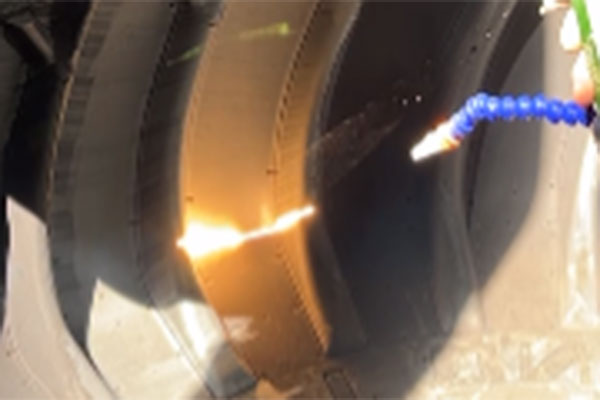 Injection molding operations are highly sensitive to tool surface condition. The accumulation of polymer residue, additives, outgassing byproducts, mold release agents, and oxidation on mold surfaces leads to defects such as burn marks, short shots, surface blemishes, dimensional variation, and extended cycle times. Traditional mold cleaning methods—manual abrasion, chemical solvents, dry ice blasting, or ultrasonic cleaning—require mold removal, press downtime, and introduce risks of surface damage or chemical exposure.
In press continuous laser cleaning is an emerging non contact technology that enables controlled removal of contaminants directly on installed injection molding tools without disassembly. This paper examines the principles, system configurations, process parameters, benefits, limitations, and implementation considerations of continuous wave (CW) laser cleaning applied in press for injection mold maintenance.
Injection molding tools operate in harsh thermal and chemical environments. During repeated cycles, polymers decompose at the gate and vent areas, volatile additives condense on cavity surfaces, and oxidation forms on exposed steel. Even minimal contamination can disrupt venting, alter surface energy, and reduce part quality.
Historically, molders have relied on scheduled mold pulls or reactive cleaning when defects arise. These approaches incur significant production losses, especially in high cavitation or multi shot tools. In press continuous laser cleaning addresses these challenges by enabling rapid, selective cleaning during planned micro stoppages or between cycles, maintaining optimal tool condition while maximizing uptime.
Continuous laser cleaning relies on photothermal interaction. A high power laser beam is scanned across the mold surface, where absorbed energy rapidly heats surface contaminants. The contaminants—typically polymers, carbonized residues, oils, or oxides—undergo:
- Thermal decomposition
- Vaporization
- Delamination due to differential thermal expansion
The underlying tool steel reflects or conducts heat efficiently, limiting substrate damage when parameters are properly controlled. While pulsed lasers offer high peak power for precision applications, continuous lasers provide higher average power and faster removal rates, making them well suited for large mold surfaces and heavy polymer buildup commonly encountered in injection molding tools.
An in press continuous laser cleaning system typically consists of:
- Fiber laser source (500 W to 3000+ W)
- Beam delivery via armored fiber optic cable
- Handheld or robotic scanning head
- Integrated safety enclosure or light tight guarding
- Fume extraction and filtration system
- Laser machine PLC /HMI panel for parameter control
In press systems are designed to operate within the molding cell. Cleaning may be performed: during scheduled maintenance pauses, between production runs and during mold open states with interlocked safety controls. Integrated robotic laser cleaning enables repeatable cleaning paths for cavities, cores, vents, and runners, while handheld systems offer flexibility for complex or legacy tooling.
Effective laser cleaning depends on the balancing of several machine parameters including: laser power output, scan speed, beam width, standoff distance and number of passes over the cleaning area. In proper settings can result in incomplete cleaning or excessive heat input.
Common mold materials include P20, H13, stainless steels, and beryllium copper inserts. Each material exhibits different reflectivity and thermal conductivity, requiring parameter adjustment. Coated molds (e.g., chrome, nickel, PVD coatings) require particular attention to avoid coating damage.
Continuous laser cleaning is effective for: polymer and resin buildup, carbonized deposits, mold release residues and light oxidation and discoloration. It is not intended for heavy metal removal or dimensional modification.
The benefits of In Press continuous laser cleaning are many. By eliminating mold removal, cleaning can be completed in minutes rather than hours, significantly increasing press availability. Improved quality is also often achieved by laser cleaning by cleaning and venting the cavity surfaces. This results in: reduced burn marks, consistent surface finish, improved dimensional stability and lower scrap rates.
Laser cleaning also preserves mold geometry and surface finish, extending tool life compared to abrasive or chemical methods. Environmentally and safety advantages are also recognized. There are no chemical solvents, minimal consumables, reduced waste streams and operator ergonomics are often improved.
Although continuous lasers are controlled, excessive dwell time can cause localized heating. Mitigation includes: optimized scan speeds, multiple light passes and infrared temperature monitoring of the tools.
Laser cleaning is inherently line of sight. Deep ribs, blind pockets, and undercuts may require repositioning, tool removal or complementary cleaning methods.
While system costs exceed traditional tools, ROI is typically achieved through reduced downtime, labor savings, and improved yield. In press laser cleaning systems must comply with Class 4 laser safety standards. Essential controls include:
- Interlocked guarding
- Key switch operation
- Emergency stops
- Laser safety eyewear
- Operator training and SOPs
Integration with press safety circuits also ensures laser operation only when safe conditions are met.
Case Study Overview (Representative)
A multi-cavity automotive connector mold experiencing frequent vent fouling required cleaning every 8–12 hours of production. Manual cleaning required mold removal and resulted in 4–6 hours of downtime per event.
After implementing a 1500 W in-press continuous laser cleaning system, vent and cavity surfaces were cleaned in under 20 minutes without mold removal. Downtime was reduced by over 80%, scrap rates decreased, and annual cost savings exceeded six figures.
Future advancements include: in beam shaping, AI-assisted scan optimization, and robotic automation are expected to further enhance in-press laser cleaning. Integration with mold condition monitoring systems may enable predictive, on-demand cleaning triggered by real-time process data.
In conclusion, in-press continuous laser cleaning represents a significant advancement in injection molding maintenance strategy. By enabling fast, non-contact, and environmentally responsible cleaning directly on installed tools, this technology reduces downtime, improves part quality, and extends mold life. As molding operations demand higher efficiency and consistency, in-press laser cleaning is poised to become a standard practice in modern injection molding facilities.