
Pre & Post Welded Surfaces
Laser Cleaning of Pre-Welding Surfaces
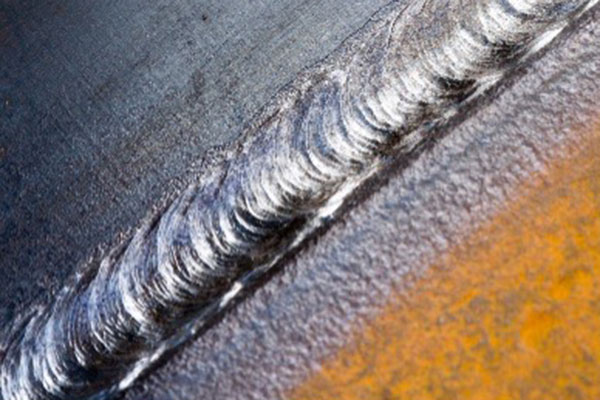 Laser cleaning is an emerging surface preparation and post-processing technology that uses high-energy light to remove contaminants, oxides, coatings, and weld spatter without mechanical contact. In welding applications, surface cleanliness critically influences weld quality, strength, and longevity. Here we review the principles of laser cleaning, compare it with traditional methods of cleaning and evaluate its effectiveness and industrial adoption in pre- and post-weld scenarios.
Surface conditions directly impact weld integrity. Contaminants such as rust, mill scale, oil, grease, paint, and oxides lead to defects including porosity, lack of fusion, and inclusions. Traditional cleaning methods—solvent degreasing, abrasive blasting, and mechanical grinding—pose limitations: environmental issues, consumables, damage to base material, and operator variability.
Laser cleaning harnesses focused photon energy to ablate unwanted material selectively, offering high precision with minimal substrate impact. Its application in welding aligns with improving joint quality, reducing rework, meeting stricter industry standards and eliminating hand surface work to improve productivity.
Laser cleaning operates predominantly on the thermal ablation process. This process causes rapid localized heating of contaminants which in turn creates evaporation or sublimation. Using a photo chemical effect, the particles are dislodged by pressure waves from the substrate. Photo-chemical decomposition of the particles then occurs whereby high photon energy then breaks the chemical bonds of the coating.
Laser cleaning uses an infrared wavelength of 1064 nm. Solid state fiber lasers are most often used for efficient surface cleaning. The laser cleaning machine process variables include pulse duration of nanosecond pulses, pulse cycles per second and on-time. These parameters affect heat diffusion and beam dissipation. Repetition rate, scan speed and beam width balance are adjustable parameters to determine both the cleaning speed and thermal load.
Laser-cleaned surfaces exhibit excellent consistent quality in preparation for the welding process. This prepared type of surface reduces porosity in arc and laser welding, possesses lower inclusion rates and allows for more consistent penetration profiles in thin sections. Studies also indicate an improved tensile strength and fatigue life when contaminants are effectively removed. The absence of abrasive residues also reduce third-body inclusions.
Laser Cleaning for Post-Welding Surfaces
There are often several undesirable surface characteristics exhibited after welding process. These include: weld spatter, oxide scale and heat-tint discoloration (especially on stainless steels and titanium). Traditional removal of defects includes grinding, wire brushing and pickling. These processes often alter surface geometry, introduce new defects, generate hazardous waste and are labor or process intensive.
In comparison, laser cleaning for post-weld applications offers precision spatter removal without grinding, oxide scale removal while preserving underlying metallurgy, improved aesthetics and corrosion performance and automatable processing for consistent results. These include high repeatability, enable: in-line processing on production lines and integration with welding robots for immediate cleanup.
Different materials generate different surface conditions. For stainless steel, laser cleaning removes heat tint and re-establishes passive layer without chemical pickling. For aluminum alloys, laser cleaning removes oxide films. And for titanium laser cleaning quickly removes surface contaminants while maintaining low heat input to avoid embrittlement.
Process optimization is essential to ensure consistent results. Recommendations include: in-situ monitoring using optical sensors that measures removal thresholds. Feedback loops to adjust beam power and scanning speed. And finally, surface characterization tools such as profilometry and microscopy assess residual roughness and cleanliness.
In conclusion, laser cleaning is a mature, high-precision technology that improves the quality of welding operations by providing controlled surface preparation and efficient post-weld cleanup. Although initial investment and integration efforts are greater than traditional methods, laser cleaning’s repeatability, environmental benefits, and superior surface consistency make it valuable for modern industrial processes.