
Surface Preparation in Non-Destructive Testing
Laser Cleaning for Surface Preparation in Non-Destructive Testing
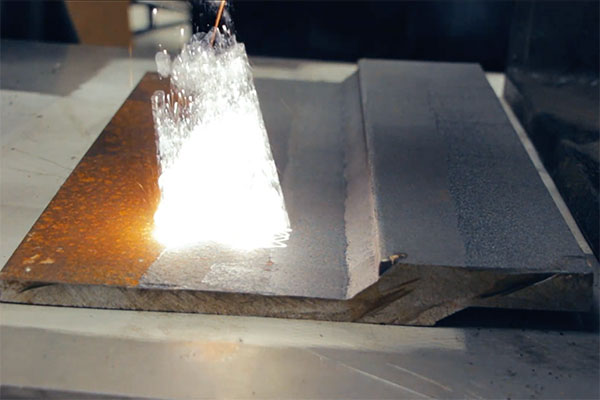 Non-destructive testing (NDT) requires pristine surface conditions for reliable detection of surface and near-surface defects. Contaminants such as rust, paint, grease, and oxides can obstruct inspection techniques like dye penetrant, magnetic particle, and eddy current methods. Proper surface preparation enhances sensitivity and reduces false negatives. Traditional methods (abrasive blasting, chemical cleaning, mechanical scraping) can alter surface topology or embed debris, potentially masking defects. Laser cleaning provides a non-contact, precise, media-free alternative with minimal substrate damage.
Laser cleaning harnesses focused photon energy to ablate unwanted material selectively, offering high precision with minimal substrate impact. Its application in welding aligns with improving joint quality, reducing rework, meeting stricter industry standards and eliminating hand surface work to improve productivity.
Laser cleaning operates predominantly on the thermal ablation process. This process causes rapid localized heating of contaminants which in turn creates evaporation or sublimation. Using a photo chemical effect, the particles are dislodged by pressure waves from the substrate. Photo-chemical
decomposition of the particles then occurs whereby high photon energy then breaks the chemical bonds of the coating or contaminant.
Laser cleaning uses an infrared wavelength of 1064 nm. Solid state fiber lasers are most often used for efficient surface cleaning. The laser cleaning machine process variables include pulse duration of nanosecond pulses, pulse cycles per second and on-time. These parameters affect heat diffusion and beam dissipation. Repetition rate, scan speed and beam width balance are adjustable parameters to determine both the cleaning speed and thermal load.
Surface preparation for common NDT methods (e.g., dye penetrant testing, magnetic particle testing) typically involves cleaning to bare metal and removal of oils, oxides, and coatings. Special attention is paid to: no embedding or folding of contaminants, preservation of surface integrity, high sensitivity for defect detection. Laser cleaning inherently meets these requirements due to its non-contact, non-abrasive nature and fine controllability of energy deposition. It is important to note that laser cleaning removes rust, paint, grease, oxides, and coatings without smearing or embedding debris that could mask flaws.
Case Studies using laser cleaning on stainless steel demonstrated thorough removal of corrosion layers with electron microscopy analysis showing controlled surface modification. This was referenced as a guide for controlled cleaning without damage.
For dye penetrant NDT the cleaning included adjusting the laser fluence and scan speed to remove oxides on titanium welds before penetrant testing. This practice achieved a high cleaning efficiency without surface damage.
Thermal effects dominate the interaction between laser and workpiece surface. Proper control of parameters such as pulse width, scanning speed, and energy density is crucial to avoid substrate alteration while achieving effective contaminant removal. Real-time monitoring (e.g., laser-induced breakdown spectroscopy) is being researched to refine parameter control.
To maintain surface integrity and cleanliness for NDT applications the laser cleaning machine parameters must be closely monitored. Achieving contaminant removal while maintaining the substrate ablation threshold should be monitored closely. Adjustment of the pulse duration and repetition rate to optimize energy deposition and minimize heat accumulation are critical to the process. Experimentation of these parameters is highly recommended before critical applications are processed. Scanning strategies to distribute energy evenly and avoid hotspots are often used for processes.
Studies show that at certain energy densities (e.g., ~4.26 J/cm² for steel rust removal), contaminants were effectively removed without substrate damage.
Current research to resolve NDT processing issues include focuses on real-time monitoring of substrate response to avoid thermal damage, adaptive control systems that adjust laser parameters dynamically during cleaning, automation and robotic integration for complex geometries and hybrid NDT techniques where laser cleaning and optical methods improve overall inspection sensitivity.
In conclusion laser cleaning is a powerful surface preparation tool for non-destructive testing that provides: controlled, non-abrasive removal of contaminants, minimal impact on surface integrity and
improved reliability of NDT inspection results. As research pushes toward real-time control and advanced monitoring, laser cleaning is poised to become a standard for high-precision NDT processing.