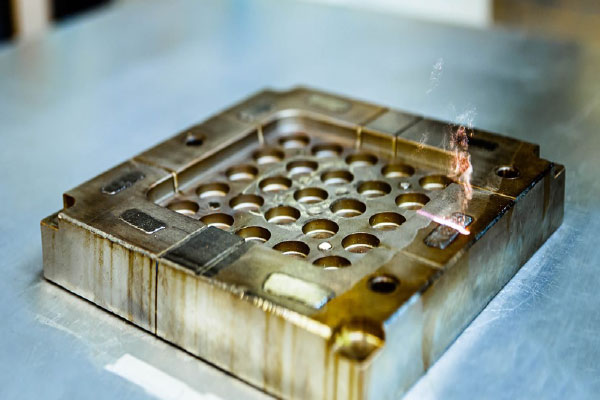
Laser cleaning provides convenient pin-point cleaning of mold components and difficult to reach surfaces with minimal time delays.
The Reality Inside Rubber Molding Operations
Rubber mold contamination is one of the most persistent and costly challenges in compression, transfer, and injection molding. During production, molds accumulate carbonized residue, mold release agents, additive by products and cured rubber buildup in vents and parting lines.
These deposits lead to blocked venting, trapped gas, short shots or burns, flash and dimensional inconsistencies, surface defects and cosmetic rejects. Combined, these can significantly increase scrap rates and rework. For high-volume operations, even minor fouling can quickly translate into significant production losses.
Traditional Mold Tooling Cleaning Methods Have Hidden Costs
| Method | Limitation |
|---|---|
| Dry ice blasting | Requires mold removal, inconsistent in micro-vents |
| Chemical cleaning | Labor intensive, safety concerns, downtime |
| Media blasting | Risk of surface damage, requires teardown |
| Manual scraping | Inconsistent, time-consuming |
For thorough cleaning, traditional methods often require removing the mold from the press resulting in several minutes or even hours of downtime per cleaning cycle. Laser cleaning in most cases avoid substantial downtime and handling / manual cleaning labor.
The Opportunity: A Quick Pause in Production
For many processes “In-the-press” laser cleaning introduces a fundamentally different approach without disassembly, cooling, or production disruption. This ability is transforming how leading rubber manufacturers approach tool maintenance.
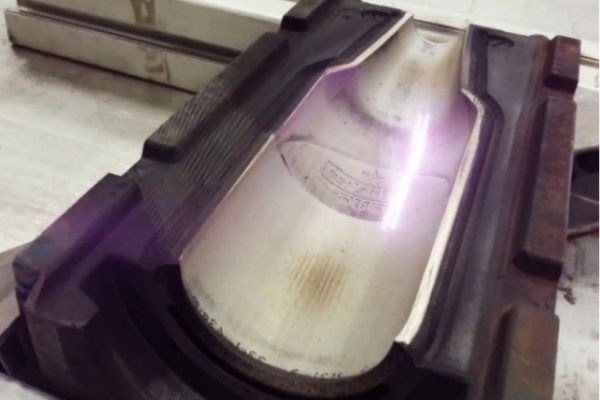 Mold To Be Cleaned
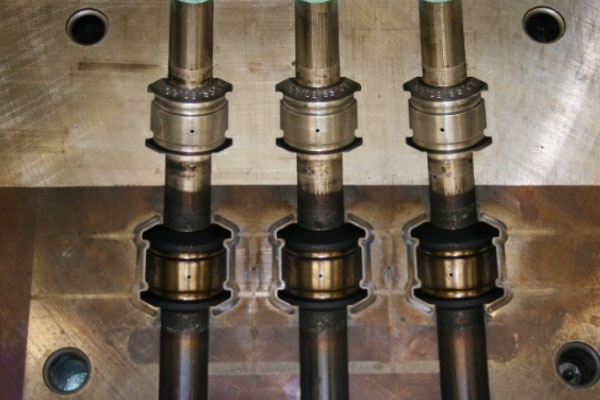 Mult-cavity Mold Partially Laser Cleaned<
Principle of Laser Cleaning Operation
Laser cleaning uses a high-energy laser beam to remove contaminants through ablation:
- Contaminants absorb laser energy
- Rapid heating causes micro-explosive for removal of contaminant or coating from tool surface
- Base tool steel remains unaffected as the larger surface absorbs the heat to maintain a lower temperature
For rubber molds, this process is ideal for removing carbonized rubber residue, release agents, silicones and process oils. The laser beam can easily be dialed into only clean small vent holes or areas of buildup.
Continuous Wave vs Pulsed Laser Systems
| Parameter | Continuous Wave (CW) | Pulsed Laser |
|---|---|---|
| Power Range | 1000–3000W | Lower average power |
| Cleaning Speed | Very fast | Slower but precise |
| Best Use | Heavy contamination, production | Texturing, delicate surfaces |
| In-Press Use | Preferred | Limited |
Precision Cleaning of Vent Features
One of the biggest advantages is the ability to clean, micro-vents (0.0005″–0.002″), deep vent channels and complex geometries. Often the laser energy penetrates where dry ice cannot reach, media blasting is ineffective and manual cleaning is inconsistent.
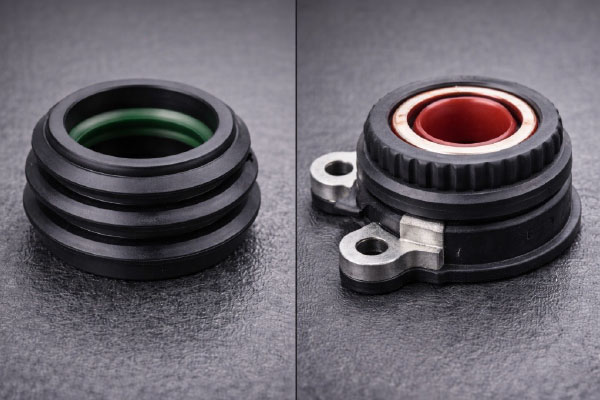
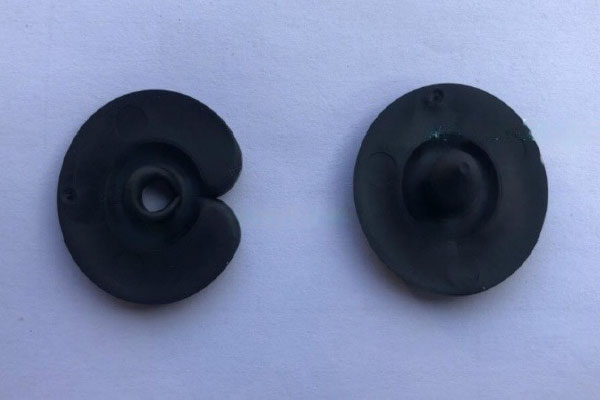
High Precision Rubber Molded Seals (Injection Molded)
Quality Improvements
Often optimized molding process conditions lead to improved production quality. These conditions are required for medical, automotive and tight tolerance industrial products. The positive results include reduced flash, improved parting line integrity, better surface finish and fewer defects tied to venting conditions. Laser cleaning of these tools promotes consistency of the process.
Tool Life Extended
Extended tool life is critical for efficiency of production and laser cleaning can be a major contributor to achieving this goal. Laser cleaning is non-abrasive, which means there is no erosion of mold surfaces, no dimensional changes and preservation of vents and important mold topography. Compared to abrasive blasting, laser cleaning becomes an excellent method to extend tool life.
Laser cleaning’s maximum value is achieved when applied to high-cavitation molds, tight-tolerance sealing components and compounds such as EPDM, FKM (Viton) and silicone, all of which are prone to fouling especially in 24/7 production environments.
The Strategic Advantage
Manufacturers implementing in-press laser cleaning gain higher press utilization, lower cost per part, improved delivery performance and reduced maintenance bottlenecks. In-press laser cleaning is not just a maintenance improvement—it’s a production strategy. By eliminating the need to remove molds for cleaning, rubber manufacturers can shift from reactive maintenance to continuous, production-integrated cleaning.
If you operate rubber molding presses and are experiencing frequent mold fouling, excessive downtime for cleaning and persistent venting or flash issues. In-press laser cleaning could be one of the highest ROI upgrades available in your plant today.
Bescutter Lasers Cleaning Machines
Bescutter Laser technology is a well proven cleaning method for mold tooling. Bescutter provides high-quality industrial-grade equipment to achieve maximum efficiency. All machines are supplied with a standard 2-year warranty that includes parts and labor. Based in Houston Texas, machines also contain onboard connections for online diagnostic repairs and maximum uptime.
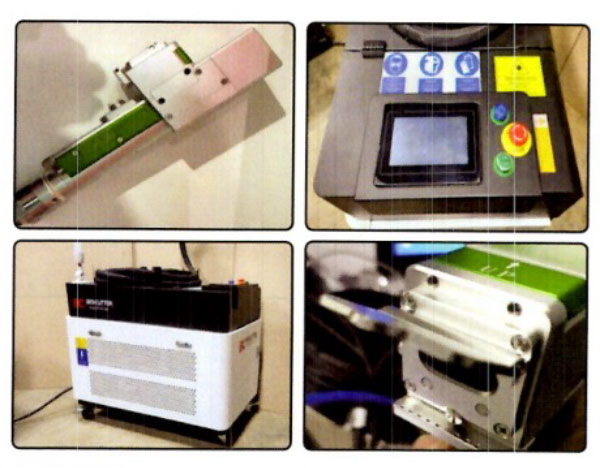
Bescutter 2000W Max Laser Cleaner

Contact us for more information: www.lasersolutionsmidwest.com or (440) 307-2054 Office/ Cell